Showing posts with label EPO. Show all posts

Monday, 18 April 2016

Inescapeable Priority Trap - T 1983/14

In the case T 1983/14, the patentee hat gotten into an inescapable trap situation by adding a limitation to the claim which had been disclosed in the EP application as originally filed but not in its Irish priority application. To make it even worse, the patentee had publicly used the invention during the priority period.

The patent related to an apparatus capable of topping up a prepaid credit on a mobile phone as well as purchasing other products (judging from the priority date 2004 I presume that the other products included ringtones, which was quite fancy at that time). The feature in question was that the "mobile telephone credit product" and other products on the apparatus were invoiced as one transaction".

The deletion of this feature would have contravened Art. 123(3) EPC while keeping the feature renders the priority claim invalid such that the patentee's prior use is prior art.

The Board points out that there is an analogy to the inescapable trap in G 1/93 as follows:
Article 123(3) EPC prevents the removal, after grant, of a problematic, limiting feature. The problem described in G 1/93 was a violation of Article 123(2) EPC. In the present case, it is lack of novelty due to loss of priority. See point 5.3 of the reasons.
 This blogger's attention was drawn to the "unambiguous disclosure" test applied by the board:3.7

The Board considers the most promising basis for "one transaction" to be the statement on page 4, lines 12 to 13 of the priority document:  
"[a]lternatively, the top-up software control module has means for printing the top-up code onto a customers receipt and adding the value of the top-up to the total receipt".  
Here, "adding [...] to the total receipt" could, indeed, refer to a running total, which is invoiced in one sum at the end. In other words, the statement on page 4 can be interpreted to cover the "one transaction" feature. That is, however, not enough. A basis must be direct and unambiguous. Thus, the question remains whether this statement is open to any other reasonable meaning.  
3.8 In the Board's view, there is an ambiguity to be resolved. "[T]otal receipt" can be read as referring to the complete physical document provided to the customer, comprising the top-up code and the receipt of payment for the top-up. In other words, both the top-up code and the price paid for the top up are to be printed on the receipt. That is, indeed, an interpretation that accords with the statements on page 1 of the priority document (see point 3.5, above). Thus, in the Board's opinion, there is no implication that the receipt is for other products than mobile top-up. Consequently, there is no direct and unambiguous implication that the purchase of other products is included in the same transaction.

In other words, a statement is not unambiguous if it is not open to any other reasonable meaning. I do not remember to have seen this test in the EPC case law and wonder if it could be helpful? As an opponent, it would be possible to disprove unambiguous disclosure by presenting a reasonable alternative interpretation. However, the discussion would then probably shift to whether or not the interpretation is still reasonable or not, which is not much different by the

Friday, 18 March 2016

EPO Social Unrest: The AC speaks

The Meeting of the Administrative Council has been eagerly awaited by the intersted public and the report is available here. As a very extraordinary measure to increase pressure onto the parties to resolve the situation, the AC has published the following "resolution on the social situation":

RESOLUTION ADOPTED BY THE ADMINISTRATIVE COUNCIL ON 16 MARCH 2016
 The AC, 
 
in its capacity as supervisory organ of the EPOrg
- having repeatedly expressed its deep concerns about the social unrest within the EPOffice;
- having repeatedly urged the EPOffice President and the trade unions to reach a consensus on an MOU which would establish a framework for negotiation between social partners;
- noting that disciplinary sanctions and proceedings against staff or trade union representatives have, among other reasons, made it more difficult to reach such a consensus;
- noting that these disciplinary sanctions and proceedings are widely being questioned in the public opinion; recalling the importance and the urgency of the structural reform of the BOA;
- recognizing the important institutional role of the AC and its dependence on a well-resourced and independent secretariat; 
 
Calls on both parties to the social dialogue to recognize their responsibilities and to work diligently and in good faith to find a way forward, and:  
Requests the EPOffice President
  • to ensure that disciplinary sanctions and proceedings are not only fair but also seen to be so, and to consider the possibility of involvement of an external reviewer or of arbitration or mediation  

  • pending the outcome of this process and before further decisions in disciplinary cases are taken, to inform the AC in appropriate detail and make proposals that enhance confidence in fair and reasonable proceedings and sanctions;  

  •  to submit to the AC a draft revision of the Staff Regulations which incorporates investigation guidelines (including the investigation unit) and disciplinary procedures which have been reviewed and amended;  

  • to achieve, within the framework of the tripartite negotiations, an MOU simultaneously with both trade unions, which would have no pre-conditions or exclude any topics from future discussions;  

  • to submit proposals to the AC at its June 2016 meeting, after discussion in B28, for immediate implementation of the structural reform of the BOA, on the lines of the 5 points agreed by the AC at its December 2015 meeting and of the legal advice given by Prof. Sarooshi, and taking into account comments from the Presidium of the BOA;  

  • to submit proposals to the AC at its June 2016 meeting, after discussion in B28, for reinforcement of the AC secretariat and a clarification of its position in terms of governance. 
Requests the staff representation and the Trade Unions  
  • to acknowledge the importance of firm and fair disciplinary procedures; and  
  • to respond constructively to the initiatives set out above, in particular to work rapidly to an agreement on Union recognition without preconditions.

This is a strong call to order, I would say, but only a "last chance" in June 2016 with no factual progress whatsoever.  While the social situation, the disciplinary issues and the reform of the BoA have been widely discussed, there appears to be a further issue with the staffing and resources of the AC secretariat and the clarification of its role.

This blogger does not have any knowledge about 5 points agreed by the AC at its December 2015 meeting and of the legal advice given by Prof. Sarooshi. If any reader knows more about this, we would be pleased to share this information.

A separate report on the 19th meeting of the select committee will be published on the EPO website within short.

Tuesday, 23 February 2016

"Up to the hilt" and "beyond reasonable doubt" - any difference?

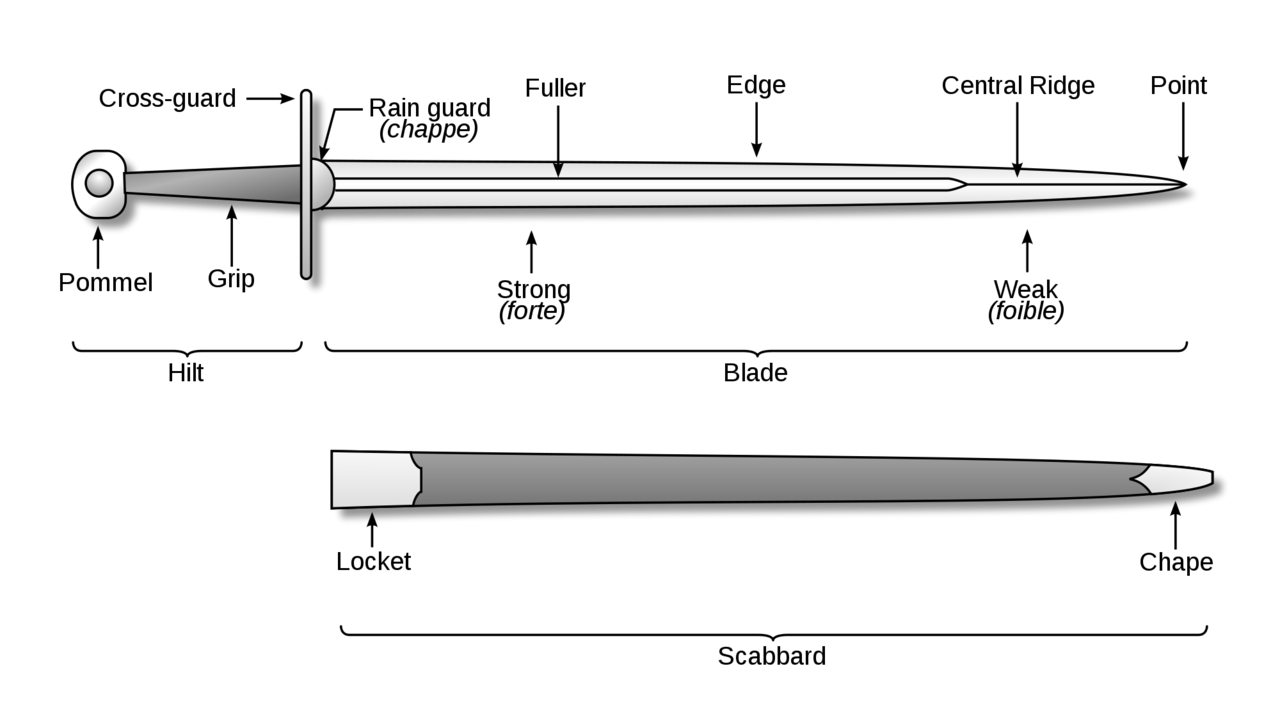
In the EPC case-law, the standard of proof for the public availability of documents or information which are completely under the control of one of the parties (e.g. public prior use by the party) is said to be "up to the hilt". The "hilt" is the part of the sword that shields the hand or is the transition part of the sword from blade to the handle and I wonder who has had the idea to use this martial expression which sounds more like medieval inquisition than like civilized EPO proceedings in well-illuminated rooms. 

In the decision T 2451/13, the board dealt with the public availability of a commercial brochure D16 bearing a "copyright date" 4 years before the filing date. Pictures identical to those of the brochure appeared in another publication. No further evidence that the brochure was indeed distributed and not kept in the drawer of the opponent had been offered. The board summarizes the case-law and concludes that up to the hilt and beyond reasonable doubt are the same thing:
If the publication date of a document originating from an opponent (or a subsidiary thereof) is in dispute, the opponent must prove that date "up to the hilt". The yardstick for this proof is that of "beyond reasonable doubt" rather than "absolute certainty" (point 3.2).
The more detailed reasoning is as follows:
3.2.4 T 472/92 did not specify precisely the conditions to be fulfilled in order for a party to prove its case "up to the hilt". However, when discussing the disputed issues, the board stated that its conclusions were based on "... an extremely high degree of certainty", which is thus clearly the yardstick - rather than "absolute certainty" - for "up-to-the hilt" proof. It is thus evident that the standard of "up to the hilt" does not require absolute certainty but that "an extremely high degree of certainty" suffices.

3.2.5 In subsequent decisions T 97/94, T 55/01 and T 2/09, this standard of proof was consistently interpreted to mean "beyond reasonable doubt":

"According to this decision [T 472/92], where practically all the evidence lies within the power of the opponent, the assessment of probability which normally underlies the boards' opinion must cede to a stricter criterion close to absolute conviction. In other words there should be a degree of certainty which is beyond all reasonable doubt" (T 97/94, point 5.1, insertion in square brackets by the present board).

"It is true that, in cases where only one party has access to information about an alleged public prior use, the case law has tended towards expecting that the public prior use be proved beyond any reasonable doubt ("up to the hilt"), answering the typical questions "What?", "When?", "Where?", "How?" and "To whom?", since the other party was reduced to merely pointing out inconsistencies or gaps in the chain of evidence; see T 472/92, reasons, point 3.1 (OJ EPO 1998, page 161)" (T 55/01, point 4.1).

"However, especially in cases where only one party had access to information about an alleged public prior use, the case law has tended toward expecting that the public prior use be proved beyond any reasonable doubt or "up to the hilt" (see e.g. T 55/01, point 4.1 of the Reasons, and T 472/92, OJ 1998, 161, point 3.1 of the Reasons)" (T 2/09, point 3.2). Also in T 782/92, where a public prior use by the opponent had occurred, the standard of proof of "beyond reasonable doubt" was applied (point 2.2).

Lastly, in decision T 1553/06 (point 6.3.3), which dealt with the public availability of internet disclosures, it was stated that "Contrary to the opponent, the board regards the terms "beyond reasonable doubt" and the more colloquial term "up to the hilt" as being equivalent".

3.2.6 The board agrees with the appellant that the standard "up to the hilt" also applies to the present case. Document D16 originates from a company (Gerber) which is now a subsidiary of the respondent.

Therefore, all the evidence about the publication date of D16 is essentially in the hands of the respondent. It thus has to be examined whether the respondent has proven beyond reasonable doubt that D16 was available to the public before the priority date of the patent.

D16 addresses parents and gives them instructions on how to feed their infants. In view of this, it would be contrary to life experience to assume that D16 was not published but rather kept by Gerber in the drawer for about 4 years, i.e. until at least (after) the priority date of the patent. This is corroborated by D17, which is an advertisement of Gerber in the spring 2002 edition of the journal PediatricBasics. In this advertisement, Gerber gives the same recommendations to parents and, in part, uses the same pictures as in D16. The board is therefore convinced that it is not only more likely than not, but quite clearly beyond reasonable doubt that D16 was published before the priority date of the patent.

Friday, 19 February 2016

Soybean Event Does Not Imply Sexual Crossing

The decision T915/10 relates to soybean plants and soybean seeds containing a DNA insert with the name "insertion event MON89788"  which is supposed to improve the yield relative the a comparable line. The DNA can be inserted by inserting a larger section of DNA named SEQ ID NO: 9.

The board applies G 07/10 to judge wether or not claimed method is an "essentially biological process for the production of plants" pursuant to Article 53(b) EPC come to the conclusion that:
The method is defined solely by the technical process step of introducing SEQ ID NO: 9 into the genome of the plant by transformation of plant cells with heterologous DNA, i.e. a genetic engineering step introducing heterologous DNA in plant cells. The board notes that the introduced trait is due directly to the expression of the inserted DNA and is not the result of a plant breeding method characterised by crossing and selection. Indeed, the method as claimed does not require nor define steps of mixing genes of plants by sexual crossing and subsequent selection of plants, either explicitly or implicitly.

The underlined sentence above relates to the origin of the introduced trait. Does it matter if the artificially introduced trait of essentially biological origin or synthetic, i.e. if steps preceding the claimed method are essentially biological or not? The board appears to try finding the answer by drawing an analogy to "mixed" methods including crossing and selection steps and additional steps of a technical nature (emphasis added):
53. Furthermore, when considering patentability of plant breeding methods in the context of claims for methods including crossing and selection steps and additional steps of a technical nature and in contrast to the situation pertaining to processes containing a technical step which serves to enable or assist the performance of the steps of sexually crossing the whole genomes of plants or of subsequently selecting plants, the Enlarged Board of Appeal held that "[i]f, [...] such a process contains within the steps of sexually crossing and selecting an additional step of a technical nature, which step by itself introduces a trait into the genome or modifies a trait in the genome of the plant produced, so that the introduction or modification of that trait is not the result of the mixing of the genes of the plants chosen for sexual crossing, then the process is not excluded from patentability under Article 53(b) EPC" (see decision G 2/07, supra, Headnote, Answer 3). This statement is considered by this board as confirming the patentability of methods for genetic engineering of plants (see decisions G 2/07 and G 1/08, supra).
Accordingly, the field of patentable genetic engineering methods outside of the realm of Art. 53(b) EPC starts where the method contains at least one step of a technical nature, which step by itself introduces a trait into the genome or modifies a trait in the genome, irrespective of whether the preceding or subsequent steps are of essentially biological nature or what the origin of the introduced trait might be.

Friday, 15 January 2016

The Non-Commutative Algebra of Inventive Step - T 1649/10

The decision T 1649/10 of the Technical Boards of Appeal raises the bar for the admissibility of an appeal under Articles 106 to 108 EPC and Rule 99 EPC. Rule 99 EPC relates to the "Content of the notice of appeal and the statement of grounds".

Rule 99(2) EPC stipulates: "In the statement of grounds of appeal the appellant shall indicate the reasons for setting aside the decision impugned, or the extent to which it is to be amended, and the facts and evidence on which the appeal is based".

In the case at issue, the patent had been maintained in amended form (with added features from the specification) by the opposition division. Claim 1 as granted had been judged to lack inventive step starting from a document D10 as the closest prior art in combination with a document D4. In the grounds of appeal, the appellant argued that claim 1 as granted was indeed non-obvious starting from D4 as the closest prior art in combination with D10.  No reason why D4 would be a more appropriate starting point than D10 was given.

D10 combined with D4 or D4 combined with D10 - does it make a difference?

According to the Board, it does. The appeal was rejected as inadmissible because the reasons of the impugned decision (obviousness starting from D10) were not properly addressed. The claim as maintained by the opposition division was considered to lack clarity and the patentee having lost its status as appellant did not find a way to overcome this problem without colliding with the prohibition of reformatio in peius. The patent was completely revoked.

This following the decision T 2077/11 , this decision highlights the importance to specifically address the reasons given in the impugned decision and to not only re-iterate one's own view of the case. While I personally think that this decision overstresses  the requirements of Rule 99(2) EPC, it should serve as a warning when drafting grounds of appeal.

Thursday, 7 January 2016

12 years is excessive - T 0823/11

The appeal case T 0823/11 lies from the (not properly reasoned) decision of the Examining Division posted on 30 September 2010 to refuse a European patent application with the filing date of 15.05.1996, which has entered the European Phase on 15 December 1997.

The duration of 12 years is considered to be a substantial procedural violation justifying the reimbursement of the appeal fee. According to point 2 of the reasons:
In the opinion of the Board, the delays cannot be justified by the particular circumstances of the case. The duration of the first-instance proceedings of more than twelve years after entry into the European phase must be regarded as excessive. According to decision T 315/03, even a shorter delay of ten years in a much more complex opposition case amounted to a procedural violation (points 15.5 and 15.6 of decision T 315/03 which was published only in an abbreviated form in OJ EPO 2006, 15). The Board in that case found that such a delay was not "within a reasonable time" and therefore infringed Article 6(1) of the European Convention on Human Rights (ECHR).
This is reasoning is remarkable because it is one of the rare cases referring to the ECHR and the delay has some similarities with the purported delay of up to 15 years for labour cases against the EPO handled by the Administrative Tribunal of the International Labour Organisation (ILOAT).

The additional delay of 5 years for the 2nd instance is not mentioned or justified. Rather, the case is remitted to the examining division, not without noting that "...  the Examining Division should expedite its final examination of the remitted case." 

Given that the Patent - once Granted - will expire in May this year, the reimbursement of the appeal fee will be a poor consolation for the applicant.

Tuesday, 5 January 2016

Reform of Boards of Appeal - Advance to Go

Back from his the holiday break, this blogger was eager to learn about the fate of the proposal for the reform of the technical Boards of Appeal presented at the pre-Christmas meeting of the EPO's administrative council which had been held on 16 and 17 December 2015 in Munich. The proposal had been outlined in the document CA/16/15 and had been the subject of a user consultation, the results of which (as interpreted by president Batistelli) had been published here. Quite a few rumors had been spread in advance and the communiqué has now been published on the EPO website.

As for the Reform of the Boards of Appeal, the communiqué contains the following statement (emphasis added):
The Council then had an exchange of views on the envisaged structural reform of the EPO Boards of Appeal. It mandated its Board 28 to elaborate guidelines to serve as a basis to the President for the drafting of concrete proposals to be submitted for decision to the Council possibly at its March 2016 meeting.
In my understanding this means that the proposal CA/16/15 has been rejected entirely rather than being remitted for entering modifications. Further, it is remarkable that the AC considers it to be necessary to elaborate guidelines to serve as a basis to the President for the drafting of concrete proposals rather than relying in the president's capacity to draft proposals alone.

Tuesday, 22 December 2015

Due Care and Annuity Reminders

The decision T942/12, which has been discussed by the IPKat here, relates to the “due care required by the circumstances to be proven when requesting restitutio in integrum.

While in the good old times, annuities have been paid (and actually had to be paid) by professional representatives, this business has now been largely conquered by specialized firms. The professional representatives then receive a notice saying “the annuities will be paid through other channels”, “you are no longer responsible for the annuities” or the like. While sending annuity reminders and actually paying the renewal fees are basically two different things, the question of reminders is rarely addressed explicitly. It is, however, generally considered to be implicit that the representative is not expected to send annuity reminders where it is clear that the payment is effected via other channels. In any case, the client would clearly not pay for such reminder services and would feel bothered and confused by receiving such reminders rather than appreciating the diligent service of his professional representative.

The above understanding is more or less common ground for reminders sent before the due date of the renewals, the situation gets complicated when it comes to official notifications indicating that the renewal fee can still be paid with surcharge and/or loss of rights communications or decisions received after the lapse of the period for payment with surcharge. The due diligence requires the representative to forward these communications unless the patentee explicitly says that he does not want this. Neither the instructions to “abandon”, to “let lapse” or to “withdraw” implies that the applicant or patentee does not wish to be kept updated on the available legal remedies for the case that the instruction was erroneous, unintentional or otherwise misconceivable. Unlike in the case of “ordinary” annuity reminders, the professional representative is expected and indeed obliged to forward official notifications drawing attention to the possibility to pay the renewal fees with surcharge or notification of a loss of right even in those cases where he thinks that the non-payment of annuities was intentional (which is often unknown to the representative) unless the client has explicitly waived the receipt of these notifications.

The duty to monitor annuity deadlines and to send reminders is considered to be transferred to the party entrusted with the effectuation of the payment whereas the duty to forward official communications and to inform available legal remedies remains with the professional representative.

The situation can of course been more complicated in cases where the ownership of the patent and/or and intermediate foreign professional representative who had sent the original instructions has changed. If the transfer of the patent is not registered, the professional representative might even have been informed about it. The waivers to receive certain information expressed by the original patentee and/or by the original foreign representative might not be valid for the new representative or patentee and might not reflect the desired services of the new patentee or representative.

Against this background, most of the patent law firms tend to forward communications received after non-payment of the annuity in case of doubt. A decision not to forward such communications would require detailed analysis of the previous instruction including the file history as described above, which would be more complicated than simply forwarding the communications by far. It is, however, difficult to charge a client for this service, in particular in cases where the responsibility for the payment of annuities has been transferred or where the right to receive this communications has been explicitly waived.

For important deadlines in general, the safe receipt of notifications of deadlines should be confirmed somehow and a series of reminders should be sent in cases of doubt.  Does this apply to cases where the professional representative is formally not responsible for the payment of annuities even if this might be perceived as bothersome in a case where the client has intentionally abandoned the protective right?  Or is the degree of due care required somehow lowered in this specific case?

The decision T942/12 has to be seen in this context. The core part of the decision goes as follows:

The renewal fee for the fifth year fell due by 31 July 2007 and was not paid. The notice drawing attention to Article 86(2) EPC dated 4 September 2007 was sent to the European representative of the applicant, Page Hargrave (PH). PH forwarded this notice to GH on 7 September 2007. GH states they have no record of ever having received this notice. PH took no further action with respect to the renewal fee as it had been instructed by letter of 9 September 2005 that it "was not required to maintain renewal fee reminder records or attend to the payment of renewal fees". ....

If a European representative is expressly instructed that he is not required to monitor the payment of renewal fees, the duty of due care does not involve that he nevertheless does so. It cannot be expected that the European representative monitors renewal fee payments at his own expense (he will not be able to charge fees for actions he is to refrain from according to his instructions). Furthermore, sending reminders against instructions may irritate the instructing party and may impair the relationship with the client. The client may have good reasons for giving such instructions, e.g. to avoid receiving reminders from different sources that will lead to additional work and expense for him. Reminders from different sources can also be a source of confusion and thus lead to mistakes. 
The present case therefore differs from the case law where it was held that even if the renewal fee was paid by someone else, the European representative remained responsible in the procedure before the EPO, and had to take the necessary steps to ensure payment (see Case Law of the Boards of Appeal, 7**(th) edition 2013, III.E.4.5.2 b)), as in none of those cases the European representative had expressly been instructed not to monitor renewal fees.

The Board therefore concludes that the duty of care of PH involved the forwarding of the notice drawing attention to Article 86(2) EPC to GH, not however checking whether GH indeed received the notice and took the appropriate action (emphasis added).

This blogger welcomes this important decision because it accounts for the complexity of real life circumstances within which professional representatives have to exercise their due care rather than imposing unrealistic requirements.

Tuesday, 27 October 2015

New EPO Guidelines - Common General Knowledge is Back

The EPO's new Guidelines for Examination applicable as of next week (November 1, 2015) have been published and it is time for practitioners to check out what is in for them.

 Section H IV 2.2 defining the basic principle  of allowability of amendments under Art. 123(2) EPC, i.e. the content of the documents of originally filed, has been amended as follows:
Under Art. 123(2), it is impermissible to add to a European application subject-matter which the skilled person cannot derive directly and unambiguously, using common general knowledge, is not directly and unambiguously derivable from the disclosure of the invention as filed.
Hence, the use of common general knowledge has been added. It is true that EPO examiners (or opponents) sometimes forgot that the person skilled in the art does not switch off his common general knowledge when reading patent documents and this blogger appreciates this clarification.

Did any of our readers find other points of practical interest in the amendments? PatLit would be pleased to share your observations.

Michael Thesen

Thursday, 22 October 2015

Arbitrariness is not fair - T0595/11 – underpayment of appeal fee

What may we legitimately expect from the
formalities officers in this building?
We have all experienced that judgments appear sometimes unfair, in particular for the underlying party. In my experience, this entirely subjective impression is less likely to arise in cases where the tangible interests of human, warm blooded parties are balanced against each other but rather in cases where the interest of one party is balanced against the interests of faceless and anonymous "third parties" or an undefined “public” whom nobody has ever met in person. This is the case e.g. for the payment of fees or legal remedies where the legal certainty for the third parties has to be established as soon as possible.

The rules of law are generally meant to strike the right balance between the interest and fundamental rights of the parties involved. In the case of an unintended loss of rights or the failure to use a legal remedy, the system of time limits for re-establishment of rights as laid down e.g. in Rule 136 EPC has been developed for this purpose, wherein in particular the time limit of one year of expiry of the unobserved time limit is meant to be fairly absolute as it insures legal certainty for third-parties.
In many cases where procedural fees are not paid or paid in an insufficient amount, the EPO or the national intellectual property office will issue a corresponding notification that the right has been lost ("loss of rights") and that it is possible to file a request for re-establishment of rights under the pertinent rules of law. While such a notification is likely to be considered sufficient to remove the cause of non-compliance with the period as it draws the applicant’s attention to this fact, the failure of the office to send out such a notification is, according to the case law, not as such sufficient to render the absolute one-year time limit for re-establishment of rights ineffective. It is the very purpose of this time-limit to create legal certainty for the public even in cases where the loss of rights has not come to the attention of the former right holder.

In view of this, the decision T0595/11 comes as a real surprise. The appellant, having its seat in Switzerland, has filed a notice of appeal in Dutch language and paid an appeal fee reduced by 20 % eight days prior to the expiry to the time limit to file the appeal. Swiss parties are supposed to understand German or French and are therefore not entitled to a reduction of the appeal fee. The amount was insufficient. However, this had not been remarked by anybody for four years until some months prior to the Oral Proceedings, when the one-year time limit according to Rule 137 (1) EPC to file a request for re-establishment of rights has long passed.


Would anybody of the experienced practitioners among our readers have expected the formalities section of the EPO board of a appeal to issue a notification
  1. within the 8 days between the payment of the appeal fees and the due date? or
  2. within the 1-year time-limit for re-establishment?
However the answer may be, I think that most of our readers would presume that the appeal would be dismissed as inadmissible.

Surprisingly, the board decided to the contrary, by referring to the “principle of good faith” and the “principle of the protection of legitimate expectations”, the board examines if a legitimate expectation of the appellant existed that the EPO should have warned him significantly earlier of the deficiency. The Board derives from Rule 101 EPC that the duty of the office to examine the correct fee payment, including the entitlement for fee reduction exists and that this check has to be done “with a reasonable time frame”, without, however exactly defining this time frame.

According to point 1.7 of the reasons “the argument that any time frame should be such that a warning can be expected in time for the appellant to file a request for re-establishment of rights, appears persuasive. However, the issue need not be decided now as the board is confident that whatever this expected time frame it might be, it is certainly shorter than the 4 whole years that have passed in the present case between the expiry of the time limit for filing the appeal (and for paying the full appeal fee) and the time when the office first made the appellant aware of this issue.” The board than considers “that an objective observer relying on the duty of the office to act as explained above would have concluded that the appeal has been examined for such formalities as the appeal fee" and “that the legitimate expectations of the appellant (and possibly other parties) that the fee payment was in good order and would no longer be objected to, where indeed established”. After having noted that not nearly the legitimate interests of the appellant must be protected in an inter partes case, the board says that it “can only strive to find with it considers to be an equitable balance of the consequences to either party.” And says that “the board must choose between a possible and certain adverse effect, where it also must consider that the possible, but nevertheless conjectural adverse effect is the prevention of an immediate success of the respondent's case (i.e. the revocation becoming final), while the certain adverse effect is the immediate loss of the appeal”. Weighing up the legitimated interest of both sides and also that of third-parties, the Board finds that “it is equitable that the office's failure is made good and the error is now allowed to be remedied as far as possible" and finally judges that the appeal is allowable (The remaining 20 % of the appeal fees had meanwhile been paid).
The core part of the judgement goes as follows:

[1.13] Weighing up the legitimate interests of both sides and also that of third parties, and considering the overall circumstances of the present case, the Board concludes that the original error might have had serious and inequitable consequences through the Office's failure to discover it. Therefore, it is equitable that the Office' failure is made good and the error is now allowed to be remedied, as far as possible. Seeing that some adverse effect is inevitable, the Board considers that the possibility of a real, but otherwise in itself not necessarily decisive setback (here the non-occurrence of an immediate success) for a party is more preferable than a certain decisive loss of all rights for another party, in particular given the fact that for a long time none of the parties did expect the latter. Put differently, a merely possible injury obviously is less serious than certain death. Therefore in the present case the Board accepts, through the application of the principle of protection of legitimate expectations, that the appeal fee has been timely and fully paid. The Board considers that in this manner overall, least harm is done to all parties. The Office has not suffered any loss either, as the fees were eventually paid in full. It is also satisfactory that in the end the appeal can be decided on its merits.

With all compassion for the appellant, this blogger finds this decision highly questionable as it tries to arbitrarily find a fair balance between the interests of the parties while disregarding the rules of law. Most importantly, the under-payment of the appeal fee was not the result of the office's negligence. If the board really thinks that the Formalities section should have notified the appellant within one year, the opportunity lost by the appellant due to the office's error would have been the lost opportunity fo file a request for re-establishment of rights. The board should therefore not have immediately considered the appeal as admissible but rather have examined an eventual request for re-establishment of rights to be filed by the appellant and whether or not the appellant has exercised all due care required by the circumstances at the time of filing the appeal.

The latter approach would have been the solution of the German courts, according to the theory developed by the BGH in "Crimpwerkzeug III" , a re-establishment maybe requested even after expiry of the one-year term for re-establishment of rights in cases where “the reasons for the failure to comply with the time limit are to be assigned to the court/office” and not to the appellant 
A decision balancing the legitimate expectations of a party with legal security for thirds parties was issued by the 10th senate of the Budespatentgericht in 2012 and has been discussed here. Following the "Crimpwerkzeug" theory, the senate judges that re-establishment may be requested even after expiry of the one-year-term
"in specific exceptional cases for reasons of ensuring an effectice legal protection and the right to be heard, in particular when the reasons for the failure to comply with the time-limit do not lie in the sphere of the party but are rather to be assigned to the court/office".
The decision T0595/11 as it stands is a clear case of arbitrariness where the explicit rules of law are overruled by fairness arguments shot from the hip.  It risks to entail attempts to circumvent the one-year time-limit for re-establishment in other cases and does poor service to the legal certainty in our field.

Monday, 17 August 2015

All change for priority at the EPO? A referral is reviewed

EPO: some important issues have been flagged
for close attention and an authoritative ruling
The European patent fraternity has been buzzing with excitement over the referral of some of its most controversial issues involving the priority of patent claims to an Enlarged Board of Appeal of the European Patent Office for what, it is hoped, will be some definitive answers. If nothing else, this referral is likely to press the pause button on a substantial number of ongoing proceedings, as interested parties apply for a stay until such time as the Enlarged Board delivers its ruling.  This clear, helpful guest post from Carpmael & Ransford's David Holland, explains why these questions are being asked, so readers can appreciate what their real-world significance might be.
All change for priority at the EPO? 
A new referral to the EPO’s Enlarged Board means that there could be a new test for partial priority at the EPO. At the very least, the referral invites the Enlarged Board to provide clarification of the current test set out in an earlier Enlarged Board decision G 2/98. The UK Courts regularly refer to G 2/98 when assessing priority, as seen in Nestec v Dualit in which Arnold J refused a request for partial priority on the basis of the test set down in G 2/98.  It therefore seems likely that any changes instituted by the Enlarged Board will be felt not just at the EPO but in the national courts too. 

Partial priority: what is it and what does it do? 
Partial priority allows part of a claim which is contained in a patent application to be entitled to an earlier date, where some but not all of the alternatives covered by the claims appear in the priority document (a provisional filing), a concept permitted by Article 88(2) of the European Patent Convention (EPC). The current test for applying Article 88(2) EPC was set down by the Enlarged Board in G 2/98 and permits partial priority provided “it gives rise to the claiming of a limited number of clearly defined alternatives” (Reasons 6.7).

Eugene Markush
For example, a claim to “compounds A or B” where only compound A appeared in the priority document would be entitled to the earlier date, but in relation to compound A only. The “A or B” scenario is simple and uncontested. The divergence between the EPO decisions that led to this referral occurs where a claim generically covers compound A, e.g. by using a generic term or Markush grouping, but does not “clearly define” compound A as an alternative in the text of the claim. Certain EPO decisions (such as T 1222/11 and T 571/10) are generous and assign partial priority by “conceptually” dividing the claim into the “limited number of clearly defined alternatives” required by G 2/98.  The conflicting strict decisions (such as T 1877/08 and T 476/09) argue that mere “conceptual” division of a claim is not permitted by G 2/98, and that instead the text of the claim must identify those alternatives in order for partial priority to be acknowledged. 

The strict test can seemingly never be satisfied by ranges or other generic terms in a claim, as the text of such terms cannot be divided into a limited number of alternatives, whereas the generous approach may allow these generic terms to be divided up and so awarded partial priority.  For example, a range of “5 to 6” in a priority document that had been broadened to a range of “5 to 7” in the claims of the application would completely lose priority under the strict approach, but have partial priority in the range “5 to 6” under the generous approach. Clearly, these two different approaches have serious implications for patent validity where there is intervening art.

The first four questions: how to assess partial priority? 
The questions referred to the Enlarged Board not only ask the Board to decide between these strict and generous approaches, but also give the Board the option of totally abandoning the G 2/98 test  for partial priority, replacing it with a new test, or providing clarification as to how the test should be applied.

Question 1 asks if it is ever possible to deny priority for subject-matter first correctly disclosed in the priority document, where that subject-matter falls within a generic claim: 
“1. Where a claim of a European patent application or patent encompasses alternative subject-matters by virtue of one or more generic expressions or otherwise (generic "OR"-claim), may entitlement to partial priority be refused under the EPC for that claim in respect of alternative subject-matter disclosed (in an enabling manner) for the first time, directly, or at least implicitly, and unambiguously, in the priority document?”
Question 1 therefore invites the Enlarged Board to remove G 2/98’s “limited number of clearly defined alternatives” test altogether, at least for “generic” claims.  It is unusual for the Enlarged Board to overrule its previous decisions, but this is by no means impossible (e.g. G 1/84 was overruled by G 9/93).

If the Enlarged Board answers “no” to question 1, it would accept that subject-matter first disclosed and enabled in the priority document and encompassed by the claim is entitled to priority regardless of any other considerations. This outcome would end the referral, as the other questions are conditional on an answer of “yes” to question 1. 

Nestec: not just a storm
in a coffee-cup ...
An answer of “no” to question 1 would contrast with the UK Court’s approach in Nestec v Dualit, where Arnold J held that three different housing arrangements covered by the claim were not clearly defined alternatives and so did not qualify for partial priority [2013] EWHC 923 (Pat), paragraph 96.  As a result, Arnold J held that the patent lacked novelty over the publication of the priority document under the UK’s equivalent to Article 54(3) EPC (section 2(3) UK Patents Act), a so-called “poisonous priority” attack. 

If the Enlarged Board considers that the mere disclosure of subject-matter in the priority document (as described in question 1) is not enough to permit partial priority for that part of a generic claim, it has to answer yes to question 1 and so move on to question 2:
2. If the answer is yes, subject to certain conditions, is the proviso "provided that it gives rise to the claiming of a limited number of clearly defined alternative subject-matters" in point 6.7 of G 2/98 to be taken as the legal test for assessing entitlement to partial priority for a generic "OR" claim?
Question 2 therefore asks whether the “limited number of clearly defined alternatives” test from G 2/98 is the correct test to use for generic claims.  If the G 2/98 test is found to be the correct one, then the Enlarged Board will move on to question 3, which asks how to use this test: 
3. If the answer to question 2 is yes, how are the criteria "limited number" and "clearly defined alternative subject matters" to be interpreted and applied?
If the Enlarged Board disagrees with the G 2/98 test, it does not need to consider question 3 but is instead asked to set a new test in question 4:
4. If the answer to question 2 is no, how is entitlement to partial priority to be assessed for a generic "OR"-claim?
Accordingly, in answering these four questions the Enlarged Board should either remove or clarify the existing partial priority test from G 2/98. A review of the decision referring these questions suggests that the referring Board may have formed a view regarding the correct answer to at least the first four questions. 

The questions referred are accompanied by around 60 pages of legal background produced by the referring Board, including a comprehensive review of the EPO’s case law and how this has been interpreted by the UK Courts (including Nestec v Dualit).  The referring Board concludes that, before G 2/98, a more generous approach was accepted.  The Board finds no mention of the G 2/98 test in these earlier decisions and states that they were not explicitly overruled in G 2/98. The Board also notes that one of the reasons underlying the decision in G 2/98 (evidence of the legislative intent from a contemporaneous FICPI Memorandum) may seem to support a more generous approach to partial priority.

These observations, coupled with the sweeping nature of question 1 as asked by the referring Board, perhaps suggest that this referring Board favours total abandonment of the G 2/98 test for partial priority. The Enlarged Board will make its own decision, and it is likely that it will be assisted by a significant number of amicus briefs from interested parties.

The fifth question: toxic divisionals 
The referring Board was faced with the “toxic divisional” attack, as discussed at length on Tufty the Cat’s blog here, an attack closely related to the “poisonous priority” attack in Nestec v Dualit. The fifth and final question ensures that the Enlarged Board must address this attack even if it requires a strict test for partial priority:
5. If an affirmative answer is given to question 1, may subject-matter disclosed in a parent or divisional application of a European patent application be cited as state of the art under Article 54(3) EPC against subject-matter disclosed in the priority document and encompassed as an alternative in a generic "OR"-claim of the said European patent application or of the patent granted thereon?”
Grandpa: one family member
who retained his priority date
In the “toxic divisional” attack, the strict G 2/98 approach to partial priority is applied by an opponent in order to invalidate a priority claim. The opponent then argues that a family member (a parent or divisional of the patent in suit) is novelty destroying under the EPO’s novelty-only prior art provisions (Article 54(3) EPC).  This attack relies on a more specific disclosure in the priority document (often an example) which is entitled to priority, set against a generic claim which is not entitled to priority (often because the claims were broadened when filing the application claiming priority).  As a result, the patent loses priority for the broadened claims, but the more specific disclosure in the family member retains its earlier date and so is citable as novelty-only prior art.  

Nestec v Dualit was not a toxic divisional attack because the novelty citation was the priority document (which had, unusually, been allowed to publish as a conventional patent application), rather than a parent or divisional.  While the toxic divisional attack has yet to be the subject of a UK Court decision, it was apparently accepted by an EPO Technical Board of Appeal in T 1496/11, although the issue is hardly discussed in the written decision leading many to question whether it is good law. 

If the Enlarged Board considers that the disclosure of subject-matter in the priority document (as described in question 1) is enough to permit partial priority for that part of a generic claim, then this would provide a permanent antidote to the “toxic divisional” problem.  If the Enlarged Board takes this route (by answering “no” to question 1) then all toxic divisional attacks must fail, because the generic claim would be always entitled to partial priority for any disclosure that appeared in the priority document.  As a result, no family member (parent or divisional) could contain a novelty-destroying disclosure with an earlier effective date.  This would be a simple solution to years of argument on this “toxic divisional” topic, but could potentially cause other complications.

The referring Board clearly appreciates the importance of comprehensively addressing the “toxic divisional” problem, because if the Enlarged Board either confirms and clarifies the G 2/98 test (question 3), or creates a new test (question 4), it must then answer question 5.  Question 5 asks whether a family member (parent or divisional) can ever be novelty-only prior art, regardless of partial priority.  There are a number of underlying legal and public policy points that have been used by patentees to argue that family members are never citeable for novelty against each other. It will therefore be fascinating to see how the Enlarged Board chooses to clarify the law in this area, if such clarification is still required following the answer to question 1.

Time for clarity -- and for dispelling spectres?
The answers to the referred questions will rewrite, or at least clarify, the concept of partial priority. It seems likely that patentees with ongoing actions in which partial priority is pleaded may request a stay until the referred questions have been answered.  If allowed, any stay would last for at least a year, as it is unlikely that the Enlarged Board will issue a decision for quite some time.   

No matter how the Enlarged Board answers the first four questions, it will have to address the “toxic divisional” problem head on.  In light of the increasing number of “toxic divisional” attacks following their apparent validation in T 1496/11, many will hope that the Enlarged Board both clarifies the law regarding partial priority and conclusively dispels the spectre of “toxic divisionals”.

This article is based on a client practice note available from Carpmaels & Ransford’s website here and first publicised on twitter by @CRPharmaIP.

Friday, 7 August 2015

Inactive patentee doesn't incur costs in EPO opposition

In Case T 0784/14 Nutritional Formulation with High Energy Content/N.V. NUTRICIA, 21 July 2015, a Technical Board of Appeal of the.European Patent Office refused to grant the opponents (Fresenius, Abbott and Nestec) a portion of their costs against Nutricia, the patent owner, who took no active part in the opposition proceedings.

According to the Board, while the work on the admissibility of the appeal and claim requests probably became necessary due to the way Nutricia (the appellant in these proceedings) conducted itself in the course of the proceedings, that did not of itself justify an apportionment of costs for four reasons:
(1) the European Patent Convention did not compel a patent proprietor to take an active part in opposition proceedings; nor was a proprietor was not precluded from filing an appeal against an adverse decision of the Opposition Division;
(2) remaining inactive during opposition proceedings and filing new claim requests only at the appeal stage is not in itself an abuse of procedure that would justify an apportionment of costs;
(3) if Nutricia had participated actively in the opposition proceedings other issues might have arisen, which might have caused the opponents more work and expenses;
(4) Nutricia's timely withdrawal of its approval of the text had actually prevented the opponents incurring even more costs.
It was not therefore equitable to apportion costs.

A cynic might take the view that, in light of items (3) and (4) above, Nutricia had done the opponents such a big favour that it might be fairer for them to pay Nutricia ...

Friday, 10 July 2015

On Finding the Most Promising Springboard - T0698/10

The decision T0698/10 of one of the EPO's technical boards of appeal contains interesting notes on the problem of determining the closest prior art as a starting point for the problem-and-solution approach used for the assessment of inventive step.

Here is the analysis of the board (emphasis added by the board):
Determining the closest prior art

3. The first step of the problem and solution approach is to determine the closest prior art, i.e. the most promising starting point - or the most promising springboard to the invention - for the assessment of inventive step. The jurisprudence of the boards of appeal has established criteria for identifying the closest prior art, see CLBoA, section I.D.3, with an emphasis on the following two:
(a) As a first criterion, the closest prior art should be related to the claimed invention, in the sense that it should disclose subject-matter conceived for the same purpose or aiming at the same objective, corresponding to a similar use, or relating to the same or a similar technical problem or, at least to the same or a closely related technical field.
(b) As a second criterion, the closest prior art should disclose subject-matter having the greatest number of relevant technical features in common with the claimed invention, i.e. requiring the minimum of structural and functional modifications.

3.1 In the present case, the subject-matter of claim 1 of the main request concerns a video processing method for decoding a bitstream according to the AVS standard. The claimed method provides an improvement over a conventional AVS decoding in that it allows the decoding of bitstreams coded according to different versions of the AVS standard (see section 2 above).

3.2 D1 is an article describing the main technical features of the AVS standard for coding and decoding video signals. The AVS standard is described in the present application as the starting point for the invention (see paragraphs [0002] to [0006] of the application as filed). D1 thus belongs to the same technical field as the claimed invention, i.e. the coding and decoding of video signals according to the AVS standard. It also serves a similar purpose and implicitly or explicitly addresses similar or the same technical problems as the claimed invention, i.e. those solved by the use of the AVS standard, such as a highly efficient video coding/decoding and an optimisation between absolute coding performance and complexity of implementation (see the INTRODUCTION section on the first page of D1). Moreover, the video processing method disclosed in D1 has several technical features in common with the method of claim 1, these features being essentially implied by the reference to the AVS standard in claim 1.

3.3 The appellant disputed that D1 could be regarded as the closest prior art, because it did not disclose the problem arising from the existence of different versions of the AVS standard (see paragraph [0006] of the application as filed).

3.4 The board concurs with the appellant that D1 does not disclose this further problem, but disagrees that it should disqualify D1 as starting point for the assessment of inventive step. Indeed, the closest prior art need not disclose all the problems solved by the claimed invention, in particular it need not disclose the objective technical problem, which is only determined in the second step of the problem and solution approach based on the technical effect(s) provided by those features distinguishing the invention as claimed from the closest prior art.

3.5 In the present case, there is no other prior art on file which discloses the objective technical problem or which would qualify better than D1 as the closest prior art. During the oral proceedings, when asked by the board which prior art was the closest prior art if not D1, the appellant replied that there was none. The board cannot agree with this view. According to Article 56 EPC an invention is to be considered to involve an inventive step if, "having regard to the state of the art", it is not obvious to the skilled person. Hence, the assessment of inventive step has to be based on an evaluation of the invention in view of the prior art. The expression "closest prior art" also does not mean that it must be sufficiently close to the claimed invention on an absolute basis, but only that it must be relatively closer to the claimed invention than the other prior-art disclosures, i.e. it is selected as the most promising starting point - or the most promising springboard towards the invention.

3.6 The appellant further argued that, according to the established jurisprudence of the boards of appeal, it was essential that the (objective) technical problem be at least suggested in the closest prior art, in order to avoid an inadmissible ex post facto analysis. It referred to CLBoA, section I.D.6 and several decisions cited therein.

3.7 The board disagrees with the appellant's interpretation of the jurisprudence in section I.D.6 of the CLBoA. This section does not refer specifically to determining the closest prior art (dealt with in CLBoA, I.D.3), but generally to the interpretation of prior-art documents, which should not be influenced by the problem solved by the invention, where the problem is neither mentioned nor suggested in these documents.

When applied to D1, this jurisprudence means that the interpretation of D1 should not be influenced by a problem solved by the invention, but neither disclosed nor suggested by D1, which in the present case is a problem arising from the existence of different versions of the AVS standard (see point 3.3 supra). However, it does not mean, as argued by the appellant, that this problem should at least be suggested in D1 in order to avoid an inadmissible ex post facto analysis (see point 3.6 supra). The board's interpretation of D1 under point 3.2 supra is based on the disclosure of D1, without any reference to or influence by the above problem relating to different versions of the AVS standard.
Hence, the appellant's arguments under point 3.6 supra are not persuasive and the board's interpretation of D1 complies with the jurisprudence in CLBoA,
section I.D.6.

3.8 The appellant further submitted that the established jurisprudence of the boards of appeal required that the objective technical problem be related to the actual disclosure of the closest prior art. The appellant referred to CLBoA, I.D.3.3 and specifically to decisions T 835/00, T 686/91 and T 1898/07 cited therein.

3.9 The board is not convinced by these arguments for the following reasons.
According to the above three decisions, a prior-art disclosure not mentioning a technical problem which is at least related to that derivable from the patent specification under examination does not normally qualify as the closest prior art, however many technical features it may have in common with the claimed subject-matter (see T 686/91, point 4 of the Reasons, T 835/00, point 4.2 of the Reasons, and T 1898/07, point 45 of the Reasons).

In each of decisions T 686/91 (see point 4 of the Reasons), T 835/00 (see section 4.4 of the Reasons) and T 1898/07 (see points 46 to 48 of the Reasons), the board considered that the prior-art document which had the greatest number of features in common with the claimed subject-matter solved a technical problem unrelated to the problem solved by the claimed invention. For this reason, the board concluded in each of these decisions that the closest prior art, i.e. the most promising springboard towards the invention, was another prior-art document which had fewer features in common with the claimed subject-matter but solved a problem more closely related to that of the claimed invention.

In other words, in each of these three decisions the board considered that in those particular cases, although the afore-mentioned second criterion (greatest number of features in common) was met, the afore-mentioned first criterion was clearly not met, because the solved problem was unrelated to that of the invention. Hence, the board considered that, overall, that prior art was less suitable as closest prior art for assessing inventive step than other available prior art.

3.10 In the present appeal case, the situation is different from that of decisions T 835/00, T 686/91 and T 1898/07 in several aspects:
(a) D1 does not solve an unrelated problem. As explained above, it relates to the same technical field as the present application, which implies that it addresses problems related to video encoding using the AVS standard. Hence, there is no problem solved by D1 which is unrelated to a problem solved by the claimed invention.
(b) The application as filed describes the AVS standard as the starting point of the invention. D1 is essentially a prior-art document providing an overview of the AVS standard. D1 is thus essentially the same prior art as the one used by the appellant (and presumably also by the inventors) as the starting point for the claimed invention. It is thus surprising that the appellant argued that document D1 was not a suitable starting point for the assessment of inventive step.
(c) The reasoning in decisions T 835/00, T 686/91 and T 1898/07 is based on the underlying principle that the closest prior art should be the most promising springboard towards the invention (see T 835/00, point 4.1 of the Reasons). This is clearly the case for D1. Moreover, the appellant could not point to more suitable prior art; instead, it merely stated that in the present case there was no closest prior art.

Hence, the board is not convinced by the appellant's arguments that only with hindsight can D1 be regarded as the closest prior art.

3.11 In view of the above, the board considers that D1 meets the requirements established by the jurisprudence for being regarded as the closest prior art.
Note for the practice: If you argue that a certain document is not the closest prior art, be sure to know which one you think is closer. 

Point 3.4 hints to a discussion which is sometimes more problematic: Inventions sometimes solve a whole plethora problems (to render the apparatus cheaper, better, fancier or simply more beautiful) and these may depend on the starting point chosen and vice versa.  The choice of the "subjective" problem is decisive for the "objective technical" problem and plays an important role not only in relation to inventive step (Art. 56 EPC) but also in relation to infringement by equivalent means.

Posted by Michael Thesen

Monday, 16 March 2015

EPO petitions for review are not third level hearings

Case R 0005/14, Apparatus for circulating flows of washing and rinsing liquids in a laundry washing machine/CANDY SpA (4 March 2015) a reminder from the Enlarged Board of Appeal of the European Patent Office (EPO) that petitions for review of decisions of the EPO's Technical Board of Appeal are not third level hearings, despite the view that many petitioners seem to take to the contrary. The review procedure is an exceptional means of redress, introduced into the amended European Patent Convention 2000 with a view to rectifying intolerable procedural violations.

The review procedure, as the Enlarged Board emphasises, was never intended to operate as a third instance. As it states in its decision:
2.2 As to the substantiation of the petition, the Enlarged Board can see no evidence that the dismissal of the appeal results from any violations of the right to be heard or from other procedural defects within the meaning of Article 112a and Rule 104 EPC. ...

The reference made to gaps in the minutes to support the petitioner's argument that it was impossible to verify –in the absence of a recording of the oral proceedings – whether his arguments were indeed taken into account, or to establish the circumstances surrounding the Board's refusal of his request to hear a university professor, is immaterial: the Enlarged Board notes that all the petitioner's grounds mentioned in the petition received a written response, irrespective of their relevance or acuity. However, as shown by ... the contested decision, some of them were completely ineffective or even alien to
patent law. In such circumstances, it may well be that the petitioner has not grasped the full import of the reasons given for the decision, but if so, that certainly does not mean that the Board has infringed his right to be heard.

3. The review procedure is an exceptional means of redress created by the legislator in the amended EPC 2000 with a view to rectifying intolerable procedural violations. It was never intended to operate as a third instance. These principles were established in the first decisions taken on petitions for review (see e.g. R 0001/08 of 15 July 2008, Reasons 2 and 3). The right to be heard does not mean that the Board must accept argumentation; it must merely consider it. Equally, it does not mean that the Board has to allow requests; it simply has to give reasons when refusing them. If the Board's response does not satisfy a party, that is not a procedural violation; it simply means that the Board took a different view of the facts. And that is not a matter for the Enlarged Board. ...
This blogger is willing to bet that this is not the last time that a petition for review will be made in the hope that it will fulfil the function of a further level of hearing.

Friday, 13 February 2015

Beware of Digital Signature Folders

In the good old times, patent attorneys used to work by messing up the file, scribbling amendments into documents, dictate submissions to the offices and then letting their secretaries do the clean up and prepare the documents and present them neatly in a leather-would signature folder. The attorney would then put his glasses on, leaf through everything put his signature on the documents if everything was to his satisfaction and proceed to the tea break.

While the work distribution of messing up and cleaning up the file is basically unchanged, this blogger sometimes misses the leather-wound signature folder. The electronic equivalent is a PDF-viewer software included in the EPOline client and today's assistants have to prepare neat PDF documents for online-filing rather than writs on handmade paper. The PDF-viewer opens automatically when clicking on the "sign" button in the software and the electronic signature can be applied only after closing the viewer again and confirming that the signature shall be applied indeed. As compared with the leather-wound signature folder, the PDF-viewer is much less classy. Besides of the PDF-documents, it shows a lot of unreadable XML code and leafing through a submission with multiple attachments may be fairly bothersome.

It is therefore tempting to circumvent the clumsy PDF-viewer, have the documents presented on paper (in a leather-wound signature folder if you like) and to trust that your secretary makes sure that what is electronically signed is identical to what you have checked on paper.

This is what the attorney did in the case underlying the decision T 1101/14 available here. In this case, the secretary had been instructed to upload the document with the grounds of appeal but failed to do so. The attorney had applied the electronic signature without remarking that the grounds of appeal were missing. In the request for re-establishment of rights, it was argued that these were two isolated mistakes in an otherwise secure system.

The Technical Board of Appeal did not find the attorney's error excusable. The catchword reads:
A representative who mistakenly signs a statement of grounds of appeal having most of its pages missing must, in the absence of special circumstances which could justify the representative's mistake, be considered not to have taken all due care required by the circumstances.


What can the attorneys learn? We have to leaf through the electronic documents in the PDF-viewer before applying the electronic signature and are not entitled to blame the secretary if something is missing.
 

Monday, 12 January 2015

T1071/06 - Jilted in Munich

As a rule, each party bears its costs in EPO opposition proceedings and the subsequent appeal. However, the opposition division or the Board of Appeal may order a different apportionment for reasons of equity (Art. 104(1) EPC), which happens very rarely.

In the case T1071/06 the board had issued a preliminary opinion indicating that a document D0 would be considered as the closest prior art and the preliminary view was that the claims were inventive over D0. In response to this, frustrating punch, the opponent/appellant indicated one month after receipt of the summons that it would not attend to the oral proceedings.

The patentee/defendant attended to the oral proceedings alone and requested to impose the costs for the preparation and attendance to the oral proceedings to the appellant because the remaining issues could have been resolved in writing if only the opponent/appellant had given up earlier.

The board found that the appellant's behaviour was not abusive but that it is fair to grant each party the right to re-consider its case after receipt of the preliminary opinion. Besides, the oral proceedings would have been expedient in any case to resolve the remaining issues.

Thursday, 11 December 2014

Explicilty mentioning the effect won't help

The Decision Human papillomavirus vaccines/GLAXOSMITHKLINE T 1493/09 available here deals with a vaccine composition having various complicated names. No surprise so far.

The main request was rejected as being obvious over the art and the auxiliary request. The obviousness of the auxiliary request is discussed in points 20 - 22 as below (emphasis added):
Claim 1 of [the auxiliary request] differed from claim 1 of the main request in that it is directed to the second medical use of the vaccine composition, i.e. it is directed to a vaccine composition for use in the prevention or treatment of a disorder related to HPV infection, as opposed to the product as such. The appellant stated that this claim type set a higher bar with respect to evidence on the efficacy as a vaccine, in particular requiring evidence of effective protection in humans.

Claim 1 of auxiliary request 1 includes the therapeutic effect ("prevention or treatment of a disorder related to HPV infection") as an explicit feature, while claim 1 of the main request does not. In other words, claim 1 of auxiliary request 1 is directed to a “vaccine composition” characterised in that it comprises VLPs containing HPV-derived proteins which is capable of generating a protective immune response for each HPV L1 protein present in the VLPs in the composition. In the board’s view, the wording of claim 1 of the main request already implies that the claimed composition is an effective vaccine for the treatment of HPV-related disorders. In fact, this effect (the same as the one as explicitly recited in claim 1 of the auxiliary request) was already taken into account by the board when evaluating the inventive step of the subject-matter of claim 1 of the main request (see in particular points 4 to 10 above). Hence, the board considers that the assessment of inventive step for the subject-matter of claim 1 of the main request according to the problem and solution approach set out at point 2 to 19 above
applies to the subject-matter of claim 1 of the auxiliary request without any change in the reasoning.  
The subject-matter of claim 1 of auxiliary request 1 therefore lacks an inventive step for the same reasons as the subject-matter of claim 1 of the main request. The requirements of Article 56 EPC are not fulfilled.
In other words, mentioning the therapeutic effect makes life more complicated in that evidence for its existence may be required but did not help in this case.