"In advance of the 30 and 31 May meetings of the European Union’s Competitiveness Council, the EU Presidency presented a note to the Council[1]. The note attached a non-paper of the European Commission setting out a credible strategy to revise Europe's patent litigation system, following a recent opinion[2] from the Court of Justice of the European Union (CJEU) regarding the compatibility of a draft international agreement[3] with the EU Treaties[4].
In response to the CJEU's concerns, the non-paper proposes that the Commission have the right to bring proceedings against Member States, should the new patents court fail to refer EU law issues to the CJEU, and also that private parties could claim damages from Member States for breaches of EU law. Subject to these amendments, the Commission believes that no further changes are required to the draft agreement to ensure compatibility with the EU Treaties.
The international agreement would establish a court system with jurisdiction over a new European patent having unitary effect in multiple EU Member States. The same court would also have jurisdiction over ‘classical’ European patents. The Commission has recently published two draft Regulations[5] setting out how the unitary patent will work. Such a unitary patent is anticipated in the existing European Patent Convention (EPC)[6], hence no new EU patent right is required. The Commission does not propose that the EU become a party to the new international agreement, nor accede to the EPC. The international agreement would now be restricted to EU Member States, thus placing the new courts firmly within the EU’s judicial system. Any new EU Regulations or international agreement is likely to make it clear that there is no intention to either expand or restrict the jurisdiction of the CJEU.
The 30 and 31 May discussions pave the way for further work with the Council aiming to agree a general approach at an extraordinary Competitiveness Council meeting to be devoted to unitary patent protection on 27 June. It is hoped that the text of the two parallel EU patent Regulations could be agreed during the Polish Presidency of the EU (the second half of 2011), with the international agreement agreed during the Danish Presidency (the first half of 2012). The unitary patent Regulations would not be adopted without the international agreement, and it may also be necessary to amend other EU Regulations[7]. This timeline reflects the Commission's goal of issuing the first EU-wide patents in 2013[8], however, one should not underestimate the level of technical legal detail (such as a regime for the service of documentation) that still needs to be agreed before that longstanding goal is finally achieved (discussions having begun nearly 40 years ago).
Footnotes
[1] Creating a Unified Patent Litigation System - Orientation debate (Council of the European Union document 10630/11)
[2] Opinion 1/09 of the Court of Justice of the European Union
[3] Draft Agreement on the European and Community Patents Court and Draft Statute (7928/09)
[4] Such as the Treaty on the Functioning of the European Union
[5] Proposal for a Regulation of the European Parliament and of the Council implementing enhanced cooperation in the area of the creation of unitary patent protection (9224/11) and Proposal for a Council Regulation implementing enhanced cooperation in the area of the creation of unitary patent protection with regard to the applicable translation arrangements (9226/11)
[6] See Article 142 EPC
[7] Such as Council Regulation (EC) No 44/2001 of 22 December 2000 on jurisdiction and the recognition and enforcement of judgments in civil and commercial matters
[8] COM(2011) 206 - Key action 3".
Showing posts with label UPLS. Show all posts
Showing posts with label UPLS. Show all posts
Wednesday, 1 June 2011
That non-paper on the Unified Patent Litigation System: a helpful explanation
It's not often that you find footnotes in a PatLit piece, but this neat summary by Will Corbett and Kevin Mooney (Simmons & Simmons) has that slightly scholarly air to it. Thanks, Will and Kevin, for shedding some light on the darkness that is the recent non-paper:

Tuesday, 8 March 2011
Today I had a (EU Patent) dream
After decades blocked, the vast majority of EU Member States decided to solve all problems of the EU Community Patent system at once. Its ambitious purpose has just (apparently) suffered a death shot with the opinion of the Court of Justice of the EU issued today.
Maybe it was being too ambitious trying to solve at the same time economic problems (registration costs through all Member States) and practical ones (litigation in all the States), while trying to avoid the competence (control) of the Court of Justice, whose Judges have an alleged low expertise in Patent Law.
Looking back it may seem the dream of a group of patent passionate professionals. Now that we are awake, can we keep on dreaming?
Today during my siesta I had the following dream:

A single office for registration in a single language (in my dream it was Spanish but maybe it would be more realistic if it were English). That office was also dealing with cancellation actions and its decisions could be in first instance appealed at (a specialised section of) the EU General Court.
Unfortunately siesta doesn’t last as it used to and I woke up just when I was starting dreaming with infringement actions. I only had time to see specialised national Patent Courts. If my dream had continued I would have been able to see if a ruling of a national Paten Court (besides the District Court of The Hague) would have effects in all Member States. Maybe then I wasn’t dreaming with European Patents but with Community Trademarks.
 Professional practice mainly focused on IP and Competition Law. General advising, judicial and extrajudicial defence (including the coordination of litigations in several jurisdictions) in relation to patents, marks, designs, domain names, e-commerce, as well as commercial contracts.
UPLS dead and buried

The following comment was received from Paul England (Simmons & Simmons, London):
"In probably the most important decision the Court of Justice of the European Union has ever made for patent owners it has this morning dashed hopes of the proposed Unified Patent Litigation System in an Opinion that says this is not compatible with European Union law.
What this means in practice
For European patent holders this means there is currently no end in sight to the current unwieldy system which requires:
• a patent to be granted for every European state for which protection is sought;
• that infringement proceedings are fought in the courts of every state in which infringement occurs; and
• that invalidity proceedings are fought in each country for which revocation of the national patent is sought;
and therefore bringing high costs and inconsistency of decisions for those engaged in patent litigation at a European level.
The only way towards a single system may now be for the Court of Justice itself to decide on patent litigation cases – something which the profession does not want.
More detail on the background to this decision
The proposed Unified Patent Litigation System (UPLS)
In December 2009, the EU Council unanimously agreed on key elements of the proposed UPLS together with the proposal on translation arrangements for a Unitary Patent put forward in early July 2010. The UPLS is the latest initiative to establish a single system in Europe that combined a single, pan-European Unitary Patent with the existing European Patent Convention system that grants so-called European Patents. Despite their name, the latter patents are only effective nationally, and so any patent revocation or infringement related proceedings that occur in Europe must be fought in the courts of the national patent affected, whether they affect more than one European country or not.
The UPLS, as well as introducing a single Unitary Patent covering all EU states, also proposes a single system of European patent courts (the European and EU Patent Court (EEUPC)) in which all European patent disputes can be heard. In essence, the proposal provides that the EU accede to the European Patent Convention (EPC), allowing the European Patent Office to grant Unitary Patents and setting up an EU Patent Court to hear disputes relating both to Unitary Patents and existing European patents. However, before proceeding with this proposed system, the Agreement was referred to the Court of Justice to decide whether the proposed UPLS is compatible with the EU Treaties. This was done using the “Opinion” procedure, provided for by Article 300(6) of the EU Treaty. This special procedure exists to allow the EU’s institutions to seek advice from the Court of Justice about the compatibility of an international agreement with EU law before signing it. Most Member States, the Council, the Commission and the EU Parliament were represented at a hearing on 18 May 2010 before the Court of Justice.
The Opinion, which says that the UPLS is incompatible with the EU Treaty and the Treaty on the Functioning of the European Union means that this proposal is now consigned to history, the latest in a long line of setbacks to proposals for such a system that has been in the planning for nearly 40 years.
What now?
This decision is a tremendous blow for those who have worked on the UPLS proposals. These include members of the EU Commission, Senior Judges and leading patents practitioners, including our own Kevin Mooney. Many will view this decision as the Court of Justice seeking to be the judicial body overseeing any single patent litigation system that comes to fruition in Europe. This was the one single issue on which the Commission, industry and the lawyers agreed at an early stage in drafting the proposals to be undesirable. This is because, according to this view, the Court of Justice does not have the necessary expertise in this area of law.
It might be thought that some attempt could be made to amend the proposed UPLS system or to go back to the drawing board completely. But, the essential reasoning for the decision is that the Member States cannot divest to an international body their powers as part of the European Union order over matters that will, inevitably, require the implementation of European Union law. So the reasons are fundamental and appear to rule out any revision of the UPLS or a return to the previously attempted European Patent Litigation Agreement (EPLA) proposal. It seems that alternatives to a system presided over by the Court of Justice have run out. The latter view is supported by a recent advance with the proposed single, pan-EU patent called the Unitary Patent in which, for only the second time in its history, the European Parliament voted for the “enhanced cooperation procedure” to be used to push this through, despite opposition from Italy and Spain on the language regime that is planned to be adopted. Decisions on such a patent would be made by the Court of Justice.Paul's disappointment will be shared by those who worked long and hard to achieve the UPLS, but not by those who have opposed it from the start for a variety of reasons. The constitutional roadblocks on which the proposal foundered were never going to be easy (some say, possible) to overcome, and it may be wondered how much appetite remains among the UPLS's supporters for seeking to navigate a path around them.
There is scant enthusiasm in industry and within the patent profession for a Court of Justice centred system and so support for this enterprise is likely to run out also".
One point on which, it seems to this blogger, all are agreed -- whether pro- or anti-UPLS -- is that there is little or no enthusiasm for any system which places patent law in the hands of the Court of Justice. But this is not the sort of consensus which can be easily converted into fresh proposals.
As ever, readers' opinions are welcomed.
Wednesday, 12 May 2010
Hearing next week on UPLS
 According to the Newsletter -- Court of Justice of the European Union, next Tuesday, 18 May at 9:00am the Court of Justice is holding its Hearing in Opinion 1/09 on the compatibility with European Union law of the Unified European Patent litigation system (on which see, eg here and here):
"The Council has requested an opinion from the Court of Justice regarding the compatibility of a proposed agreement creating a European and Community Patents Court with the EC Treaty. The draft international agreement would be concluded between Member States, the European Union and the non-EU Member States of the European Patent Office and will have jurisdiction in respect of European and Community patents.Thank you, Chris Stothers (Arnold & Porter), for spotting this.
This special "Opinion" procedure, provided for by Article 300(6) of the EC Treaty (not to be confused with an Advocate General's Opinion), exists to allow the EU's institutions to seek advice from the Court of Justice about the compatibility of an international agreement with EU law before signing it (to avoid the EU entering into a treaty which is subsequently declared illegal by the Court). One of the specificities of this procedure is that it will be heard by the entire court (all 27 Judges and 8 Advocates General). At the hearing, the Court will hear the submissions of various EU institutions and Member States".
Wednesday, 18 November 2009
Community patents and ULPS: a secret system?
 Writing earlier today on his IP::JUR weblog ("EU Community Patent and UPLS: Will There Be A Political Breakthrough Soon?") Axel H. Horns provides an update on his post of 2 November ("EU Community Patent: The Mill Goes On and On"), citing the blog of the Intellectual Property Experts' Group to the effect that
"On December 3 and 4 ... the Competitiveness Council will assemble again to see if they can reach an agreement on 'a general political' approach for the Community patent/UPLS efforts. The question on what language(s) should be the common one(s) for a potential community patent remains a sore spot for many member states. [...]"But as Axel observes, there has been considerable recent activity in the EU Council which, it appears, has been carefully locked away from the general public:
* 16141/09 - Enhanced patent system in Europe - Draft Council conclusions - Drafting proposal by the Hungarian delegation; 17-11-2009As Axel notes, the decision to build UPLS on the basis of an Agreement outside the EU Lisbon Treaty not only enables accession by non EU-States like Turkey but also means that the painstaking process of ensuring ratification by all EU member States plus interested States outside the EU has to start again. The Danish Government has already indicated (Document 14531/09) that this would require a transference of competence and therefore either a national referendum or a 5/6 majority in Parliament. The still-unpublished legal questions referred to the European Court of Justice (ECJ) are also still pending.
* 16180/09 - Enhanced patent system in Europe = Comments by the Danish delegation; 17-11-2009
* 15695/09 - Draft Council conclusions on an enhanced patent system in Europe - General approach on the proposal for a Council Regulation on the Community patent; 13-11-2009
* 15695/09 ADD 1 - Enhanced patent system in Europe - Draft Council conclusions; 13-11-2009
* 15695/09 ADD 2 - Proposal for a Council Regulation on the Community patent - Revised text; 13-11-2009
* 15148/09 - Draft Council Conclusions on an enhanced patent system in Europe - Revised/annotated text; 29-10-2009
* 15122/09 - Draft Council Conclusions on an enhanced patent system in Europe - Comments by the United Kingdom delegation; 28-10-2009
PatLit notes that negotiations relating to the Anti Counterfeiting Trade Agreement (ACTA) have been conducted in conditions of almost total secrecy, which has caused a good deal of resentment. While not quite the same degree of black-out has accompanied the current burst of initiatives relating to the Community patent and UPLS proposals, there seems to be little willingness to open the substance of these proposals to the well-educated, skilled and highly-trained practitioners who will be responsible for making them work (or for demonstrating that they can't).
In a representative democracy such as that which the European Union purports to be, lip-service is often given to the importance of there being a well-informed electorate, whose mature and considered wishes might be translated into legislative policy. However, a cynic might suggest that intellectual property policy is far too important a matter to be left to wider debate and that it is for interested parties to scavenge the contents of leaks, Tweets, blogs and the rumour-mills in search of a better understanding of current developments.
Tuesday, 10 November 2009
The UPLS: will it make a real difference?
 The final session of todday's "Standards and Patents" conference was dedicated to the Unified Patent Litigation System (UPLS, or "Upples" as I like to think of it), the new reality now that EPLA, the European Patent Litigation Agreement, is dead and buried.
First to speak was Nokia Director of IPR, Regulatory Affairs, Tim Frain (right), who gave an up-to-the-minute account of the impending reality of an international convention, which should be done and dusted this December. Tim's PowerPoints, which are as information-rich as they are visually riveting, can be viewed here.
Tim's presentation was followed by mine. Since Tim had covered the subject so well, I chose to argue the thesis of "change = no change", suggesting that the position of patent owners and litigants in Europe post-UPLS -- in terms of business plans, risk, strategy, interference from competition authorities and so on -- would be much the same as they are at present. My PowerPoints, which give some idea of my points but do not adumbrate them in detail, can be accessed here.
Friday, 6 November 2009
UPLS: bright ideas, please!
This coming Tuesday afternoon I'm sharing an IBC Informa conference platform with Tim Frain (Director of IPR, Regulatory Affairs at Nokia) on the subject "Developments in Connection with a Unified Patent Litigation System for Europe". Tim is giving some background and explaining the meat of the current proposals, looking at them not merely from a patent-owner's point of view but in the context of the 'Standards & Patents' theme of the conference. My task is to put together a collection of perspectives that I can bounce off the proposals, leading into the discussion session.
I can produce my own list of 'favourite topics', but I feel that my contribution to the day's programme would be enhanced if I could reflect some of the informed and thought-out opinions of colleagues who are involved at the coalface of patent litigation rather than (as in my case) the standpoint of the enthusiastic spectator.
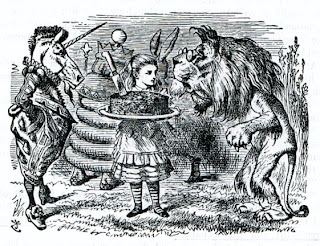 Above: will the unique characteristics of national patent dispute resolution system be lost or merged into a unified system once consensus is agreed?
If there are any issues you'd like me to mention, or points you'd like me to raise, please email me here and let me know. If you'd rather I didn't mention you as the source or inspiration of my comments, please just say so. In return, I hope to be able to report on anything of particular interest or note which is said during or after the session.
I can produce my own list of 'favourite topics', but I feel that my contribution to the day's programme would be enhanced if I could reflect some of the informed and thought-out opinions of colleagues who are involved at the coalface of patent litigation rather than (as in my case) the standpoint of the enthusiastic spectator.
 Above: will the unique characteristics of national patent dispute resolution system be lost or merged into a unified system once consensus is agreed?
If there are any issues you'd like me to mention, or points you'd like me to raise, please email me here and let me know. If you'd rather I didn't mention you as the source or inspiration of my comments, please just say so. In return, I hope to be able to report on anything of particular interest or note which is said during or after the session.
Subscribe to:
Posts (Atom)