Showing posts with label interim relief. Show all posts

Friday, 5 October 2012

Has it ever happened ...?

Interim injunctive relief for infringement
of a standards-essential patent: have
you ever applied ...?
A curious reader has written in with the following question. Does anyone have an answer?
(a) Has anyone ever applied in the United Kingdom for an interim injunction in respect of a standards-essential patent;

(b) If the answer to (a) is yes, what happened?
This blogger thinks that the answer to (a) is "no" -- but he is equally aware that patent litigation in the UK is a dark and murky pond in which many a large fish may lurk undetected.  In fishing for an answer on behalf of his reader, he hopes that one such fish may bite ...

Wednesday, 30 May 2012

Silence Speaks a Thousand Words

PatLit is delighted to host this guest post from Liz Cohen, a partner in Bristows and an enthusiastic patent litigator. Liz writes on a topic which is of great evidential value and philosophical interest: the extent to which it is permissible to draw an inference as to the intention of a party which is based not on what it says but on what it declines to say:
"Silence Speaks a Thousand Words

The recent case of Merck Sharp Dohme Corp and Bristol -Myers Squibb v Teva [2012] EWHC 627(Pat) is the latest in a long line of cases in the pharmaceutical arena where a generic company, (in this case Teva), has faced an application for an interim injunction to prevent it launching a generic drug pending full trial. The case law before the English and Welsh Patents Courts is well established in relation to such applications, the deciding factors being those established almost 40 years ago by the then House of Lords in American Cyanamid v Ethicon Limited [1977] FSR 593 (archived on BAILII here). Although subject to some occasional fine-tuning, the factors that the Court must consider in deciding whether to make an order for an interim injunction remain by and large the same:
i. Is there a serious issue to be tried; 
ii. If so, would damages be an adequate remedy for either party? 
iii. If not, where does the balance of convenience lie?
It is this last criteria that is usually the subject of most evidence from both sides and where much time is spent in the development of arguments and submissions to convince the Court to make the order for an interim injunction or, alternatively, dismiss the application altogether.

However, this case serves as a sharp reminder that it can also be what, is at best, not said, and, at worst, deliberately omitted, that can be just as important to the Court as the wealth of written evidence and submissions served in deciding the application for an interim injunction, and was in fact critical in this case.

The case related to a patent (EP 0 582 455) owned by Merck and Bristol-Myers Squibb (‘BMS’) which provided compound protection for efavirenz, an anti-retroviral medicine used in the treatment of HIV and AIDS. An SPC obtained on the basis of the patent expires on 20 November 2013. Teva obtained a Marketing Authorisation (“MA”) for its efavirenz product via the Centralised Procedure, 22 months before the expiry of the SPC.

Just before Teva’s MA granted BMS’ lawyers wrote to Teva seeking an undertaking that Teva would not launch its efavirenz product in any country in which the patent remains in force. No undertaking was given by the requested deadline and BMS informed Teva that they therefore presumed Teva indeed intended to market the product imminently. In light of this, and taking into account that Teva launched its generic atorvastatin surreptitiously last summer, BMS applied for an interim injunction in the High Court of England and Wales.

In his judgment from the inter partes injunction hearing Judge Birss QC clarified that, in order to bring an action for interim relief on a quia timet basis (in other words, on the basis of a threat to infringe, rather than an actual act of infringement), as BMS had here, a defendant must have threatened and intended to infringe the patent in question. The intention to launch did not have to be immediate – if the intention was to launch before expiry of the patent, this would be enough even if expiry was someway in the future. How this was proved would depend upon the facts of each case.

On the facts before him, Judge Birss considered that it was reasonable to infer that Teva intended to launch before the expiry of the SPC. He considered the timing of the MA (as noted above, just less than 2 years before expiry) and the absence from Teva of a satisfactory explanation as to why an application so far in advance of patent expiry was necessary, to be important factors. He also noted that, while a failure to offer satisfactory undertakings or indeed any form of response does not in itself prove the existence of an intention to infringe, at the interim stage it may, depending on the circumstances, be fair to draw an inference from the silence.

In arguing that an injunction should not be imposed, Teva claimed that divulging its launch date would expose a valuable commercial secret. Judge Birss agreed that the date of any launch could be a valuable commercial secret. However, the fact that Teva, a generic company, intended to launch a product on patent/SPC expiry would “not be news to anyone.” Therefore if this was Teva’s plan, they could simply have said so.

Accordingly, an interim injunction was granted to BMS pending a full trial on the merits.

This decision is in line with the rationale of English civil litigation that potential parties to litigation should communicate with each other and try to resolve disputes without recourse to litigation. While the Judge stressed that each case turns on its particular facts, this action brings strongly into focus the need for a generic company to be clear about its commercial intentions if it wishes to resist a preliminary injunction ahead of patent expiry. If it is not, it is clear that the Courts will be prepared to draw a negative inference from its silence".

Wednesday, 24 November 2010

Interim relief in Argentina: a useful summary

Following the adoption of the Agreement on Trade-Related Aspects of Intellectual Property Rights (TRIPS), patent legislation in Argentina was brought into compliance with the minimum TRIPS standards.   TRIPS Art. 50, which governs the enforcement of IP rights, requires that courts have the power to order prompt and effective provisional measures to prevent the infringement of any IP right. It was assumed until 2003 that the remedies available to patent owners in Argentina were already fully enforceable, and that consequently it was possible to use such remedies to prevent an alleged infringement during the prosecution of a substantive infringement action. However, in 2004 an amending statute, Law 25,859 (following an agreement between the Argentine and US governments and World Trade Organisation consultation) imposed new requirements on patent owners wishing to obtain preliminary injunctions. These additional requirements made it more complex and time-consuming for patentees to obtain temporary injunctions.

In Sanofi-Aventis v Sandoz SA, in 2009, Sanofi-Aventis sought a temporary injunction following the amended procedure.  The first instance judge appointed an expert who prepared a report on the likelihood of validity and infringement. The defendant was served notice of the temporary injunction request and the court-appointed expert report. The judge then issued the order, in a decision which was upheld by the Federal Civil and Commercial Court of Appeals for the Second Circuit.

The nature of the 2004 amendments, the details of this litigation and its confidence-boosting impact on patent-owners are described in helpful detail an an article from which this note is taken, "Landmark decision issued on pharmaceutical patent enforcement", by Federico Augusto Aulmann (Obligado & Cia), published on International Law Office here.

Monday, 22 November 2010

A less than overwhelming case for an injunction

Last Friday, sitting in the Patents Court, England and Wales, Mr Justice Floyd gave judgment in Cephalon, Inc & others v Orchid Europe Ltd & another [2010] EWHC 2945 (Pat).  PatLit is delighted to publish this note on the decision by Paul Cole (Chartered Patent Attorney, Lucas & Co, Professor of IP Law, Bournemouth University and an editor of the CIPA Guide to the Patents Acts). Writes Paul:
"An instructive decision concerning an application for an interlocutory injunction was handed down on Friday 19 November by Floyd J in Cephalon v Orchard Europe and Generics.

The patent in issue was based on the proposition that the size of particles of the drug modafinil in a composition in which it is contained is important to the potency and safety profile of the drug, and in the claimed composition at least about (sic) 95% of the cumulative total of modafinil particles were to be of diameter less that about (sic) 200μm.

A first question was whether the allegedly infringing product had particles of the correct size. The experts for the parties were in disagreement as to the effects of the test methods used on the measured particle size, and Floyd J held that the evidence as it stood was very weak that just about cleared the threshold of arguability. A second question was validity, and there was an extremely pertinent earlier reference. Although as the evidence was incomplete and inconclusive Floyd J was not prepared to hold that there was no arguable case that the patent was valid.

An interesting issue of law then arose under the American Cyanamid ruling as to whether prospects of success should be taken into account when deciding whether to grant interim relief pending the full trial. Floyd J held that this was not a case on facts about which there was no credible dispute that the strength of the defendants’ case was disproportionate to that of the plaintiffs. Accordingly the debate turned to balance of convenience, which was held not to favour grant of an injunction, although a speedy trial was ordered.

Although there can be little doubt that the overall result was correct, a more robust approach to the technical facts is possible. A little arithmetic illustrates the point. It seems common ground that the patent would need amendment and that the patentee’s prospects of success could be assessed as at most 50% on the evidence as it stood. On infringement, as the evidence stood, their prospects of success could also be assessed as at most 50%. Since it was necessary to succeed on both issues, their overall prospects stood at not more than 25%. It is not clear that the ratio decidendi in American Cyanamid is that a complete blind eye should be turned to the underlying facts. If the plaintiff needs to win on more than seriously disputed issue and his case appears the weaker on two or more of those issues, it is hard to see how it would be appropriate to grant an injunction except in the most exceptional circumstances".

Wednesday, 14 July 2010

Suspension of compulsory execution: a shift in German practice?

In a recent article, "Suspension of compulsory execution as relief from patent injunctions", German patent litigation lawyer Philipp Ess explains how, for defendants in most patent infringement proceedings, the threat of an injunction halting production is of greater concern than the patentee's as yet unasserted damages claims.

The position of the alleged defendant in applications for provisional relief is particularly delicate since, while plaintiffs can themselves be held liable for losses incurred by the defendant if thre was no infringement and must post security bonds against this eventuality, the loss of income resulting from the defendant being ordered to cease production pending the full trial can easily exceed the value of the security bond and the solvency of the plaintiff. What's more, being ordered to halt production can seriously damage the defendant's reputation.

It is possible for defendants to seek protection against compulsory execution before the trial court renders a judgment, if they can show that an injunction would lead to severe and irreparable damage. However, this protection comes at a cost: in order to seek it the defendant must disclose business secrets regarding its solvency, sales figures and profit margins to the opposing party -- who in the context of patent infringement proceedings may very well be a competitor. The consequence of this is that, once the trial court has ordered an injunction, a defendant may play safe by accepting an unfavourable licence agreement rather than risking an appeal.

This article then goes on to explain the working of Section 719(1) of the Germany Civil Procedure Code, which empowers an appeal court to suspend the compulsory execution of a trial court injunction until the appeal court has decided on the merits. Courts are reluctant to do this in the context of patent infringement proceedings, given the short life and market sensitivity of a patent -- which tends to encourage courts to prioritise the patentee's interest in the expeditious enforcement of a patent. However some recent decisions have bucked this trend by granting motions for suspension.

To read the full article by Philipp Ess (Klinkert Zindel Partner) in International Law Office click here.

Friday, 14 May 2010

Interim injunctive relief in Spain

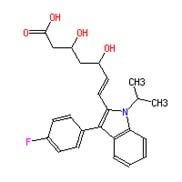
Writing for International Law Office earlier this week ("Novartis's endeavours to obtain interim injunctions come to naught"), Sara Pelaz (Grau & Angelo) explains what happened last December when pharma company Novartis applied for an interim injunction against Medis EHF, Laboratorios Stada, SL and ratiopharm España, SA alleging infringement of its EP948320 patent on pharmaceutical compositions for the sustained release of fluvastatin, a patent which was amended during EPO opposition proceedings.

As the title of the article indicates, Novartis failed. The saga is an interesting one, since it deals with the curious situation in which a plaintiff relies on patent claims which appear to be in constant flux as the patent passes from the Opposition Division to the Board of Appeal, where the patentee requests that issues be remitted to the Opposition Division following the submission of fresh documents and the joinder of further parties in the EPO proceedings. Defendants often appear to present a moving target; less often can the same be said of the plaintiff's patent.

Wednesday, 8 July 2009

Interim relief "more nuanced than expected", says Pharma Report

Today's Pharma Sector Report from the European Commission's DG Competition contains a large amount of statistical data concerning the litigation and/or settlement of disputes involving pharmaceutical patents in more than half the member states of the European Union. There's far too much data for PatLit to be able to make a convenient summary of it and, despite its extensive use of tabular formats to illustrate and contrast numbers and trends, there is in any event only a limited amount that one can learn from them. For example, they cannot take into account the merits of the cases before the courts in terms of such core issues as the (non)obvious nature of disputed patents and the scope of the claims in both infringement and validity proceedings.

While DG Competition comes out in support of both a Community patent and a unitary court system for the litigation of patent disputes, its investigation was principally into matters concerning competitiveness within the pharma sector and the report does little more than endorse the position which the Commission is already known to hold.

One matter which may be of particular interest to readers of this blog is that of interim relief against alleged infringement. On this the report says
"(656) ... the subsample of cases with interim injunctions shows two particular features, namely: a high ratio of settled cases (73%, i.e. 44 out of 60 cases, which are final) and a low ratio of judged final cases (27%, i.e. 16 out of 60 cases). Furthermore, it is interesting to note that in the subgroup of settled cases, there is a tendency to end litigation with the conditions that are favourable to generic companies (i.e. either allowing generic entry or a value transfer from the originator to the generic company). Even if this cannot be regarded to be a conclusive indication as to likely outcome of the respective court cases, this element needs to be borne in mind when interpreting a higher proportion of the cases with interim injunction won by originator companies (11 out of 16 cases).

(657) The overall picture is thus more nuanced than one would have expected from the cases in which interim injunctions, the most restrictive legal tool, were granted, taking into account that, when requesting interim injunctions, the applicant is usually required to show that he is likely to succeed in the main proceedings and to demonstrate urgency. Adding up the actual generic successes (8%) and the settled cases appearing to be particularly favourable to the generic companies (38%), it would seem that in almost a half of the closed cases the grant of interim injunctions might not have been justified, whilst in another 25% of the cases that were settled the situation is unclear".

Monday, 13 October 2008

Servier ordered to pay damages on cross-undertaking


Last week Mr Justice Norris in Les Laboratoires Servier and another v Apotex Inc and others [2008] EWHC 2347 (Ch), heard on 9 October. Servier developed and patented a pharmaceutical known as Perindopril (a prescription drug used in treating hypertension), which it sold under the trade mark Coversyl. This patent was the '341 patent'. In July 2000 Servier applied for a further patent (the '947 patent') covering an allegedly new form of Perindopril. In July 2006, the European Patent Office dismissed an opposition, so the 947 patent survive unscathed.

Generics manufacturer Apotex decided to make Perindopril, receiving the necessary market authorisations. Apotex wasn't afraid of the 947 patent which, it considered, was only a rehashed version of the 341. Servier sued for patent infringement and secured interim relief, restraining importation of Apotex's product. In subsequent proceedings the patent was found to be invalid and was revoked by the court. Since the interim injunction had stopped Apotex selling Perindopril for a large period of time, the court now had to quantify its entitlement to damages under the cross-undertaking given by Servier when the application for interim relief was granted. While the inquiry into damages was grinding towards a close, Servier sought permission to amend its case in the light of a finding of infringement against Apotex in the Canadian Federal Court in Canada, in proceedings to which Servier was not a party, this patent being held not by Servier but by an associated company. The point of the application was this: the Perindopril which Apotex would have sold if no injunction had been granted would have been made in Canada and would have infringed the associated company's patent.

Norris J dismissed Servier's application. In his view it was made at too late a stage in the proceedings. The Canadian proceedings actually predated the commencement of the inquiry into damages on the cross-undertaking; the underlying legal point, if valid, had been in existence since the beginning of the inquiry and it had been open to Servier to make the application from the outset -- but it didn't. Worse news was still to come for Servier when Norris J concluded that, on the evidence, the appropriate award under the cross-undertaking was damages totalling £17.5m.

Norris J added that a party that secures interim relief before failing to establish infringement is not actually a 'wrongdoer', but someone who has obtained an advantage upon consideration of a necessarily incomplete picture. From the court's perspective such a person should be treated as if he had made a promise not to prevent that which the injunction in fact prevented. There had to be some form of symmetry between the process by which he obtained his relief (an approximate answer involving a limited consideration of the detailed merits) and that by which he compensated the subject of the injunction for having done so without legal right, particularly where -- as here -- the paying party had refused to provide full details of the sales and profits which it made during the period when the injunction was in force.

Servier expressed itself "disappointed" by the decision and said it was considering whether to appeal. The claimant did have some comfort, seeing as Apotex was actually seeking £27 million. Moreover, said the former patent owner:

"The UK is the only European market, with the exception of the Netherlands, where Servier has been challenged on the validity of a national designation of European Patent number 1 296 947 and there has been a decision in favour of a generics company".